


Colocation Hosting is a service where a business or organization places its own IT equipment (servers, storage, firewalls, routers, and other networking devices) in a professional third-party datacenter instead of maintaining it on-premises.
In other words, the client retains full ownership and control of their hardware, but installs it in a specially designed facility that provides high levels of security, uninterrupted power, cooling, and network connectivity. This differs from other hosting solutions, where the client rents servers owned by the provider.
With Colocation, the equipment belongs to the client, and the service is focused on providing space, infrastructure, and support services to ensure the proper operation of the hardware. Essentially, the business "rents space and services" for its equipment rather than investing in its own server room.
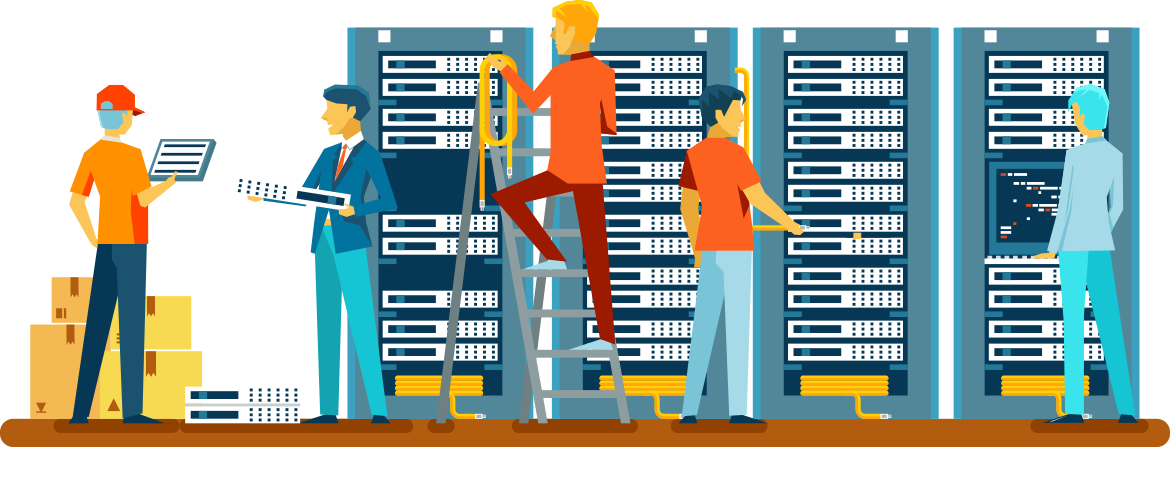
A colocation provider rents space in a datacenter where clients can install their equipment, while also providing power to the servers, network bandwidth, IP addresses, cooling systems, physical access security, fire detection and suppression, and all other necessary infrastructure for successfully deploying the servers.
Additionally, colocation providers enforce strict security measures, including security personnel and biometric access control. Resilience is another key feature, as datacenters provide backups and UPS devices to protect against outages, including those caused by natural disasters, fires, or floods. In summary:
- The client purchases or provides their own servers, storage, or other networking equipment.
- The equipment is transported and installed in racks within the datacenter.
- The datacenter provides infrastructure such as:
- Uninterrupted power supply (UPS + generators)
- Controlled cooling and humidity
- Physical security (24/7 security, CCTV, restricted access)
- High-speed Internet connectivity with multiple carriers
- The client remains responsible for maintaining and managing the hardware, or can use managed services provided by the datacenter.
This way, the business combines ownership of its equipment with the benefits of a professional, secure, and highly available environment.
- Security and Availability. Colocation provides physical and network security, redundant power, backup generators, and highly resilient environments. This significantly reduces the risk of data loss or downtime.
- Stable Environmental Conditions. Datacenters have specialized cooling and humidity management systems, ensuring that equipment always operates under optimal conditions.
- High Connectivity. Facilities offer multiple high-speed connections with carriers and internet exchange points, ensuring low latency and high-speed access.
- Scalable Infrastructure. Expanding infrastructure is easy, with the ability to add new servers, rack units, or even cloud resources without additional on-premises installations.
- Ownership and Control. Unlike fully managed hosting, the client retains full ownership and control of their systems, with the ability to choose software, operating systems, and configurations to meet their needs.
- Compliance and Certifications. Hosting in certified datacenters helps meet regulations such as GDPR, privacy security protocols, international design and construction standards, TIER classification, ISO commitments, etc., relieving the business from complex compliance obligations.
- Businesses that want to retain control of their equipment while leveraging datacenter infrastructure.
- Organizations that require high availability, redundant power, and secure environments.
- Companies seeking gradual scaling of infrastructure without investing in in-premise server rooms.
- Clients needing to comply with security and data protection regulations.
Colocation Hosting combines the security, availability, connectivity, and scalability of a professional datacenter with the ownership and control of the client’s servers. It is a strategic solution that reduces risks, increases reliability, and allows businesses to focus on growth without being limited by technical and infrastructure constraints.